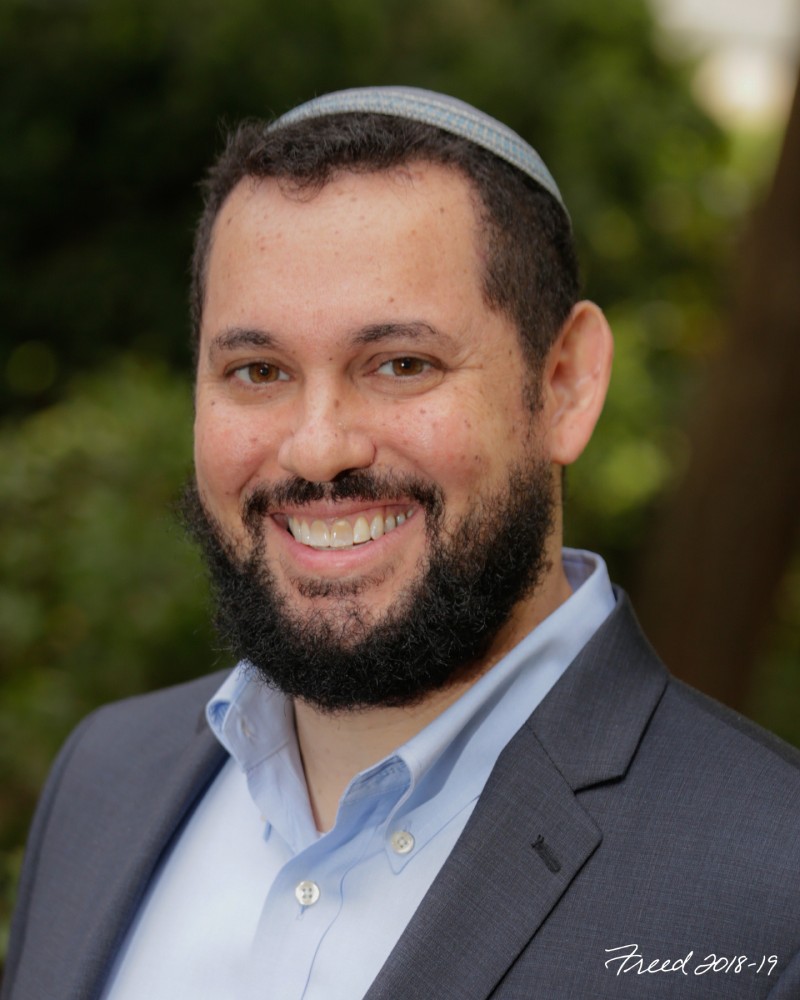
Rabbi Uri Topolosky is the Rabbi of Kehilat Pardes, a synagogue in Aspen Hill, and is affiliated with the Berman Hebrew Academy.
I want to share a Dvar Torah inspired by Yad Yehuda’s Tomchei Shabbos program.
One of the first questions asked in our Torah from humanity is השומר אחי אנוכי, transliterated as ha-shomer achi anochi.
The way we typically read this line is, “Am I my brother’s keeper?” We read it as almost a sarcastic comment in the Torah. But it’s a real question — and it’s a question that we should all be hearing.
Am I my brother’s keeper?
I think that one could answer that the rest of the Torah is a response to that question. Ha-shomer achi anochi? Really? Of course!
It’s a responsibility we all share. And one of the echoes that I hear much later in the Torah is Yosef’s answer when he is seeking his brothers. He’s lost and not sure how to find them. Yosef is asked, “What are you looking for?” And he replies, “Et achai anochi mevakesh” — I am seeking my brothers.
I am seeking my brothers. I’m looking for my sisters. And that is our responsibility.
What does it mean to be our brother’s keeper? It means to seek them, to look out for them, to keep our eyes open, to see our whole community — and to recognize that, in all of the places in our community, there are so many people in need.
We don’t even appreciate the kinds of needs that exist: sometimes long-term, sometimes short-term. But one of the times I think it’s most profound to answer the needs of others is on Shabbat.
It’s the time in the week that I think, as a community, we see each other the most. And it’s a time when it can be embarrassing for folks who are facing challenges — because they don’t want to be seen. They don’t feel like they have a place in the community because they’re struggling. They’re facing difficult challenges: financial challenges, health challenges, family challenges.
I think one of the great gifts of Yad Yehuda’s Tomchei Shabbos program is that it helps people feel that they can celebrate Shabbat, that they can have a reprieve from those challenges. But it’s also a time when we all have a responsibility to make sure that everyone can feel a part of our community.
This program allows them to be in our community, to be seen in our community, to feel comfortable in our community —
removing the stigma of struggle.
I think that’s why it’s so important right now to support Yad Yehuda and Tomchei Shabbos — so we can truly answer that call of ha-shomer achi anochi and know that we are, indeed, our brothers’ and our sisters’ keepers.